
What lens should I buy first? An honest guide to lenses
Your kit lens is better than its reputation. The right first upgrade depends on which of its two limits you keep hitting: not enough light, or not enough reach.
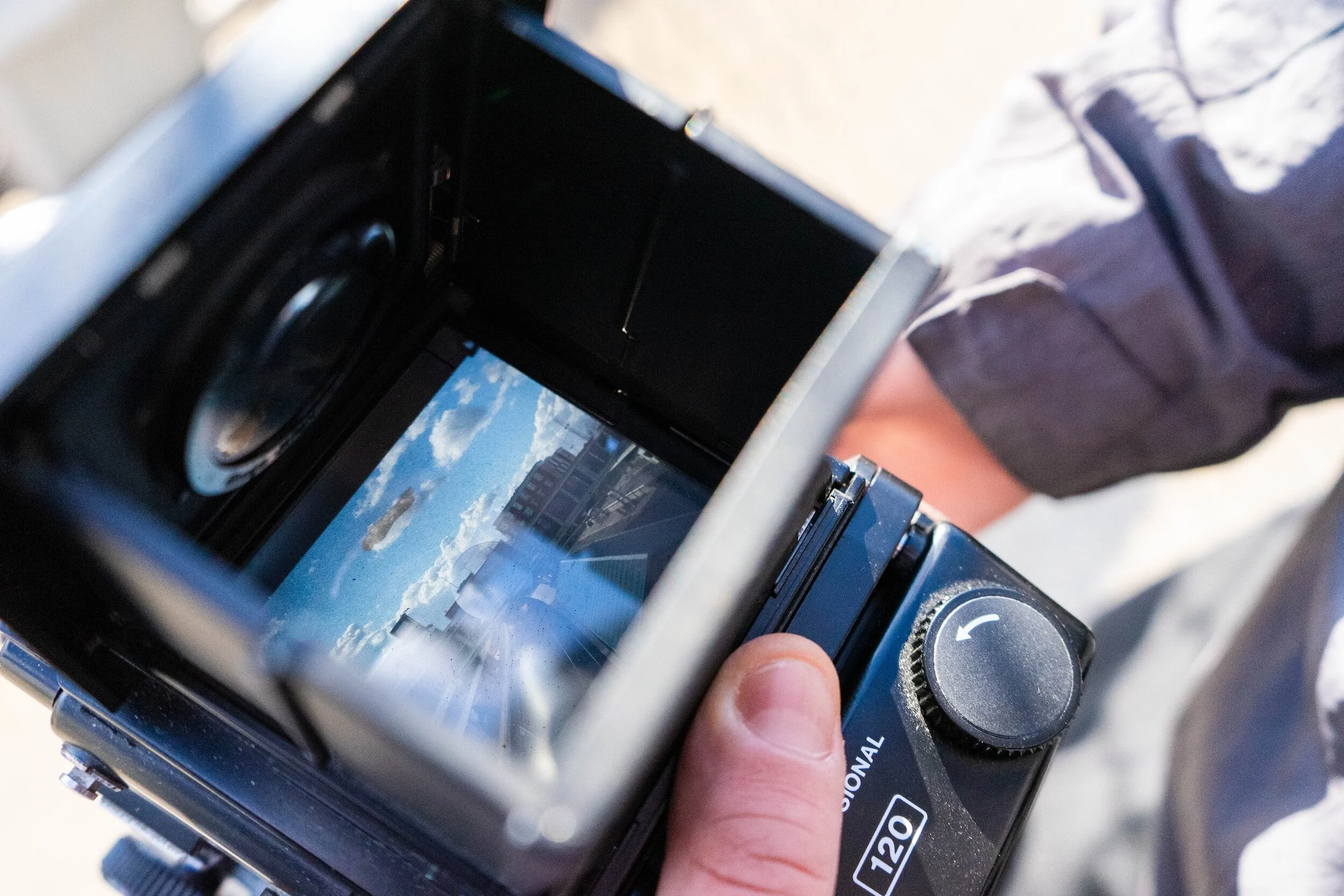
Look at the barrel of the lens that came in the box with your camera. On most interchangeable-lens kits it will say something close to 18–55mm and f/3.5–5.6. Those two sets of numbers explain almost every frustration beginners have with it: the blurry indoor shots at a birthday party, the portraits where the background refuses to melt away, the bird that stays a speck in the middle of the frame. They also explain why the kit lens is better than its reputation.
The first number is the focal length range, which sets how much of the scene you see. The second is the maximum aperture, which sets how much light the lens can let in. When people ask what lens they should buy, they are really asking which of those two limits they have hit.
Is the kit lens good enough?
Often, yes. A modern kit zoom is small, light and sharper than most people expect when stopped down to f/8 in good light. It covers wide landscapes at one end and loose portraits at the other. Plenty of strong photographs have been made with one.

Its weakness is light. At the long end, many kit zooms can only open to around f/5.6, which is a small opening. Indoors or at dusk, that forces your camera to choose between a slow shutter speed, which blurs movement, and a high ISO, which adds noise. The same small aperture makes it hard to throw a background out of focus.
So before buying anything, use the kit lens deliberately for a month. Note which photographs failed and why. If the answer is "too dark" or "background too busy", you need a faster lens. If it is "too far away", you need a longer one. If nothing failed, keep your money.
Why the nifty fifty is the classic first lens
The 50mm f/1.8, affectionately known as the nifty fifty, is usually one of the least expensive lenses in any camera maker's range, and one of the most useful. It is a prime, meaning it has one fixed focal length and no zoom. What you give up in flexibility you gain in light.
An aperture of f/1.8 lets in roughly eight times as much light as f/5.6. That is three stops: the difference between 1/15 sec and 1/125 sec at the same ISO, or between ISO 6400 and ISO 800 at the same shutter speed. Indoors, in cafés, under streetlights on Swanston Street, that difference is the photograph.
When people ask what lens they should buy, they are really asking which limit they have hit.
The wide aperture also produces shallow depth of field. Focus on someone's eyes at f/1.8 from two metres and the background softens into a wash of shapes and colour. A 35mm f/1.8 does the same job with a wider view, and on a crop-sensor camera many people find it the more natural everyday lens. Both teach you to move your feet, which quietly improves composition.
Focal length and crop factor explained
Focal length is a property of the lens. A 50mm lens is 50mm on any camera. What changes is the sensor behind it. A smaller sensor records only the centre of the image the lens projects, so you see a narrower slice of the scene, as if you had zoomed in.
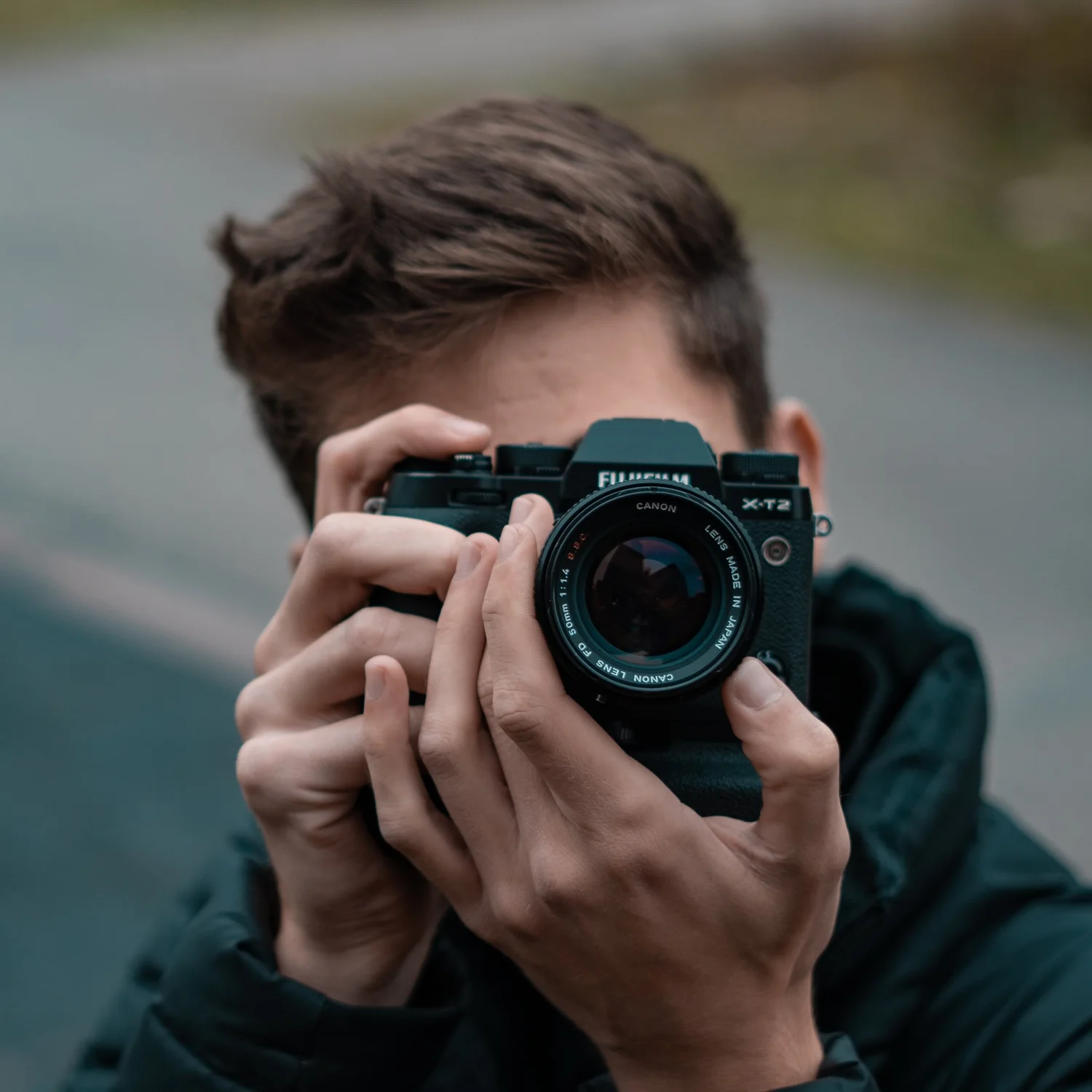
The ratio between a sensor and a full-frame (35mm) sensor is called the crop factor. APS-C sensors, used in many entry and mid-range cameras, have a crop factor of about 1.5, or about 1.6 on Canon's APS-C bodies. Micro Four Thirds is 2. Multiply the focal length by the crop factor to find the full-frame equivalent field of view. A 50mm lens on an APS-C camera frames like a 75–80mm lens on full frame, which is why it suits head-and-shoulders portraits so well.
The aperture's effect on exposure does not change: f/1.8 lets in the same light per unit of sensor area on any format. At the same framing, though, a smaller sensor gives somewhat deeper depth of field, so backgrounds blur a little less.
| Lens | Full-frame view | On APS-C (1.5x) | Good for |
|---|---|---|---|
| 16–24mm | Very wide | About 24–36mm | Landscapes, interiors |
| 35mm | Natural, slightly wide | About 52mm | Street, travel, everyday |
| 50mm | Standard | About 75mm | Portraits, low light |
| 85–105mm | Short telephoto | About 128–158mm | Portraits, details |
| 200mm+ | Telephoto | 300mm and beyond | Wildlife, sport |
The best lens for travel: an all-rounder zoom
If you travel with one lens, a prime can feel restrictive. A standard zoom covering roughly 24–70mm full-frame equivalent, or a longer-range travel zoom reaching around 200mm or more, lets you move from a wide street to a distant façade without swapping lenses in the dust or rain.
Travel zooms trade some sharpness and light-gathering for range, and most have variable maximum apertures. That is a fair trade on a trip where the alternative is missing the shot. If you want something better than the kit lens without the size of a professional zoom, look at constant-aperture f/4 zooms, which balance weight, quality and cost well.
Macro and telephoto lenses for specific subjects
Some subjects simply need specialist glass. A true macro lens focuses close enough to reproduce a small subject at life size on the sensor, a 1:1 ratio. Nothing else will fill the frame with a bee or a dewdrop. Many macro lenses sit around 90–105mm, which also makes them excellent, if slightly slow-focusing, portrait lenses.

For birds, wildlife and sport, reach matters. A telephoto zoom ending at 250–300mm is a common starting point; serious bird photographers often go to 400–600mm. At the Melbourne Zoo wildlife workshop, a 70–300mm-style zoom is ample, and learning to shoot through wire and glass teaches more than extra length ever will.
Buy these when a subject keeps calling you back, not because they might be useful one day.
Buying a lens second-hand
Lenses hold their value and outlast camera bodies, so the second-hand market is excellent. A few checks make it safe.
- Confirm the mount. Mirrorless and DSLR mounts differ even within one brand; adapters exist but can affect autofocus.
- Shine a torch through the lens from both ends. Look for fungus (web-like threads), haze or separation. Small specks of dust are normal and harmless.
- Check the rear glass carefully. Scratches there matter far more than on the front element.
- Turn the zoom and focus rings through their full range. They should be smooth, without grinding or dead spots.
- Test on your own camera if you can: autofocus, stabilisation and a few frames at the widest aperture.
A reputable dealer with a return period is worth a slightly higher price. Third-party lens makers are also worth considering, but check compatibility with your specific body.
If you are unsure what your camera can already do, one of our private photography lessons can include a camera and lens set-up session before you spend anything.
Practise this
- Tape your kit zoom at 35mm or 50mm for a week and shoot only at that focal length. You will learn whether a prime suits you before you buy one.
- Photograph the same person at the widest and longest ends of your zoom, keeping their face the same size by moving. Compare the backgrounds.
- Shoot indoors at night at f/5.6, note the shutter speed and ISO your camera chooses, and calculate what three stops faster would give you.
Questions, answered.
What is the best first lens to buy?
Is a 50mm lens good on a crop-sensor camera?
Does crop factor change the aperture?
Is it safe to buy a second-hand lens?
Published by CapturEDU, Melbourne photography education. Our educators are award-winning photographers with a Master of Arts in Photography (RMIT), AIPP and RPS membership.
