
Autumn colours near Melbourne: where and when to shoot them
Victoria's autumn colour lives in its old hill stations and gardens, and the peak can last barely a week. Here is where to go, when to go, and how to photograph it.
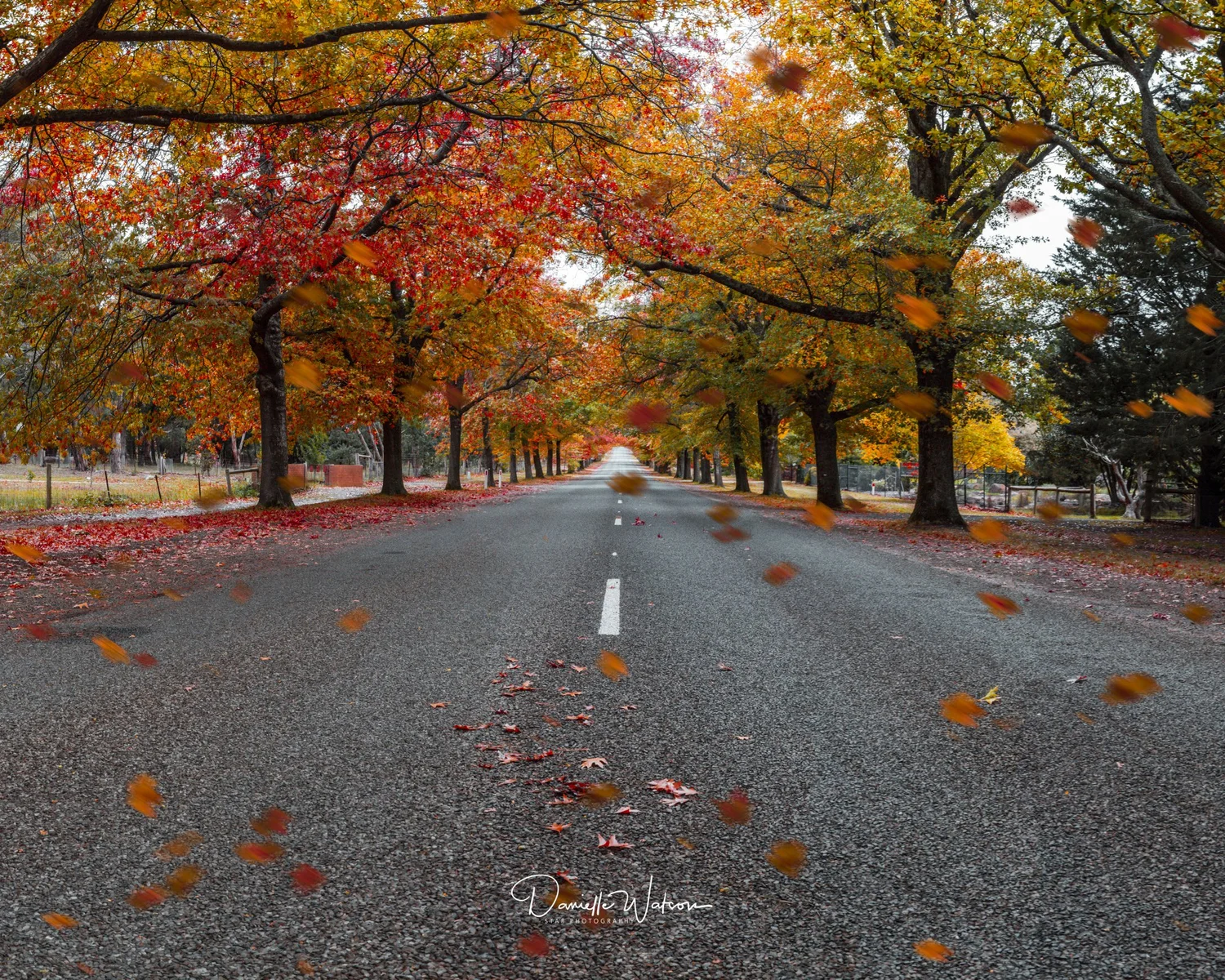
There is a week, usually somewhere in April, when the road up Mount Macedon turns into a tunnel of gold. The leaves come down overnight in a cold snap, and by morning they cover the bitumen so thickly that the white lines disappear. Arrive a week early and the trees are still mostly green. Arrive a week late and they are bare branches. Autumn photography near Melbourne is less about knowing where to go than about knowing when.
Victoria's native trees are mostly evergreen, so the famous autumn colour comes from the exotic deciduous trees planted in the hill stations, gardens and country towns during the nineteenth and twentieth centuries: maples, oaks, elms, liquidambars, beeches and ashes. That history determines where to look.
When is the best time for autumn colours near Melbourne?
Roughly late March to early May, with the peak often falling in mid to late April. That is only a guide. The timing shifts every year with rainfall, temperature and wind, and it varies between sites. Higher, cooler places tend to turn earlier than sheltered lower ones, and a single windy night can strip a street in hours.
The most reliable planning tool is recent local information. Gardens, visitor centres and local community pages often post updates as the colour builds. Check them the week before you go, and keep your plans flexible enough to move a day.
| Location | Approximate drive from the CBD | Best for |
|---|---|---|
| Mount Macedon | About 1 hour | Avenues, grand gardens, fog |
| Dandenong Ranges | About 1 hour | Gardens, tree ferns, lakes |
| Daylesford | About 1.5 hours | Botanic gardens, lake, town streets |
| Bright | About 3.5–4 hours | Tree-lined streets, river, mountains |
Mount Macedon and Honour Avenue
Mount Macedon is the closest thing Victoria has to a New England autumn. The village and the slopes around it are filled with old hill-station gardens, and the mountain roads are lined with mature exotic trees.
Honour Avenue, the tree-lined memorial avenue on the road towards the summit, is the signature shot. It was planted to honour local servicemen, which is worth remembering while you work. The classic composition uses the road as a leading line running into the distance, trees arching from both sides. A telephoto focal length of around 70–200mm compresses the avenue, stacking the trees together so the colour looks denser than it does to the eye.
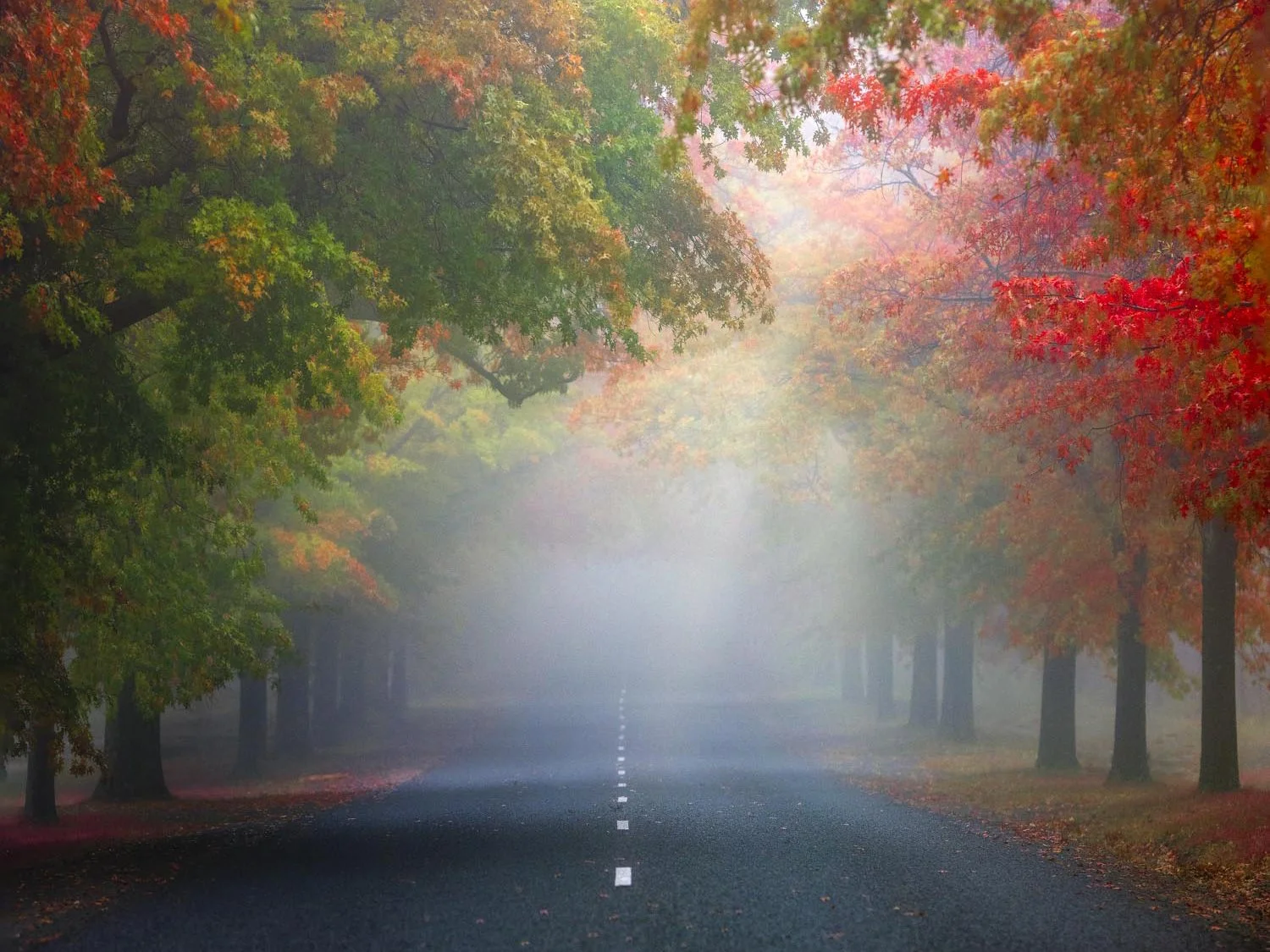
This is a working road. Stand well off the bitumen, wear something visible, and never set a tripod on the carriageway. Early mornings on weekdays are quieter, and low cloud often settles on the mountain in autumn, which softens the background into layers of grey that make the colour glow.
Several private gardens around Macedon open to the public seasonally. Hours, dates and fees change from year to year, so check before you travel.
The Dandenong Ranges gardens
The Dandenongs offer something no other autumn destination near Melbourne does: blazing European trees growing among tall mountain ash and native tree ferns. That contrast of deep green and bright gold is the look to chase.
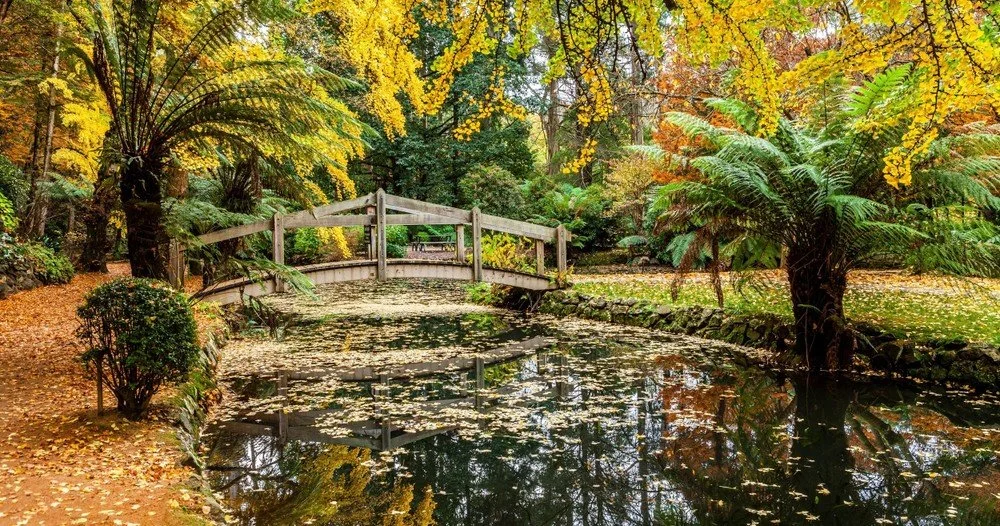
Three gardens are worth building a morning around. The Alfred Nicholas Memorial Garden at Sherbrooke has an ornamental lake ringed with maples and tree ferns, and on a still day the reflections are extraordinary. The Dandenong Ranges Botanic Garden at Olinda is known for its spring flowers but has fine autumn colour across its sloping lawns. The R.J. Hamer Arboretum nearby is less manicured, with walking tracks through plantings of trees from around the world.
The ranges are often misty in the morning, especially after rain. Mist simplifies backgrounds, and wet leaves carry deeper colour than dry ones. The roads and car parks fill quickly on autumn weekends, so an early start pays twice.
Daylesford and Bright
Daylesford is an easy day trip with plenty packed into a small area. Wombat Hill Botanic Gardens, on the rise above town, has old exotic trees and good views. Lake Daylesford, ringed with autumn trees, gives you reflections early in the morning before the wind picks up. The streets and cottage gardens of Daylesford and neighbouring Hepburn Springs reward a slow walk with a short lens.
Bright, in the Alpine Valleys of the north-east, is a longer drive and best as an overnight trip. The town's avenues of deciduous trees are spectacular at their peak, and the Ovens River running through town adds reflections and moving water. Nearby Mount Buffalo and the surrounding valleys give you mountain backdrops, and the cold air that settles in the valley overnight often produces morning fog. It is a popular time of year, so book accommodation well ahead.
If you would like to see the Macedon Ranges with the timing and locations worked out for you, our photography tours include a Macedon Ranges itinerary.
Camera settings for autumn colours
Choose overcast light. Bright sun creates harsh contrast among leaves: glaring highlights, black shadows. A bright overcast sky acts like a huge softbox and lets colour saturate evenly. It is the best autumn light there is. On sunny days, work early or late, or shoot into the light so the sun glows through the leaves.

Use a polarising filter. Leaves are covered in a thin reflective sheen that reflects sky and dulls their colour. A circular polariser cuts that glare. Rotate it slowly while you watch the screen and stop where the colour looks richest. The effect is especially strong on wet foliage, and it will also darken a blue sky and remove reflections from water, which you may or may not want.
A bright overcast sky is the best autumn light there is.
Watch your white balance. Overcast light and shade are cool, and auto white balance can leave autumn colour looking flat or slightly blue. Try the cloudy or shade preset, or set around 6,000–6,500K, to restore warmth. Go gently: push too far and everything turns orange, including the grey trunks and paths that should stay neutral.
Mind the exposure. Bright yellow foliage can fool your meter into underexposing. Check the histogram, and add a third to two-thirds of a stop of exposure compensation if the colour looks muddy.
A full day in the hills with a guide gives you time to work each location properly. Our full-day private workshops can be built around an autumn location of your choice.
Practise this
- Find one tree near home at its peak and photograph it with and without a polariser, rotating the filter through its full range. Compare the colour.
- Shoot the same avenue at 24mm and 200mm from different distances, keeping the far end similar in size, and notice how compression changes the density of colour.
- Photograph autumn leaves on AWB, the cloudy preset and 6,500K on an overcast day, then decide which looks most like what you saw.
Questions, answered.
When is autumn colour at its peak near Melbourne?
Where are the best autumn colours near Melbourne?
Does a polarising filter help with autumn photos?
What is the best weather for photographing autumn leaves?
Published by CapturEDU, Melbourne photography education. Our educators are award-winning photographers with a Master of Arts in Photography (RMIT), AIPP and RPS membership.
