
Drone photography in Australia: the rules and a safe flight
A drone is an aircraft, however small. Here are the basic CASA rules for recreational flyers, the etiquette that goes beyond them, and how to plan a safe flight that produces good photographs.
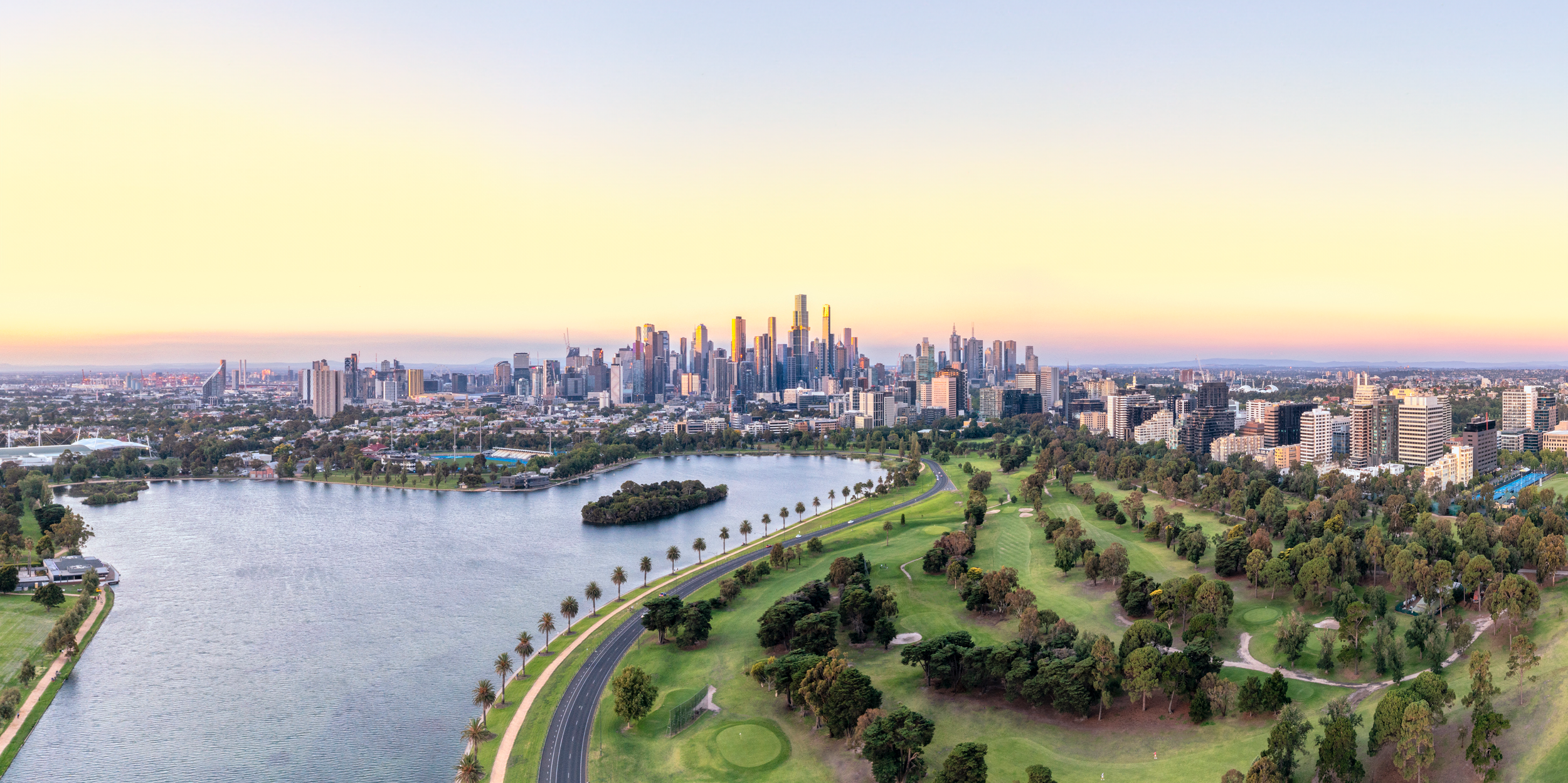
From 100 metres up, Albert Park Lake stops looking like a lake. It becomes a shape: a dark curve of water, the pale line of the path around it, sailing boats reduced to white commas. That change of perspective is why drone photography is so appealing. It is also why the rules exist. A drone is an aircraft, however small, and the sky above Melbourne is shared with helicopters, light aircraft and airliners, while the ground below is full of people who did not agree to have anything flying over them.
This guide covers the basic rules for recreational drone flyers in Australia, the etiquette that goes beyond them, and how to plan a flight that is safe and actually produces good photographs. Rules change, so treat it as a starting point and check the current detail with the Civil Aviation Safety Authority (CASA) before you fly.
Drone rules in Australia: the basics
CASA sets the rules for drones in Australia. If you fly for fun, with no money or business involved, you follow its standard drone safety rules. The core rules are well established:
- Fly no higher than 120 metres above ground level.
- Keep at least 30 metres away from other people.
- Keep the drone within your visual line of sight at all times: with your own eyes, not through the screen or goggles.
- Do not fly over or above people, or in populous areas such as beaches, parks in use, sports events and festivals.
- Fly one drone at a time.
- Fly only in daylight, and not in or through cloud or fog.
- Keep away from controlled aerodromes. If your drone weighs more than 250 grams, do not fly within 5.5 kilometres of a controlled airport, one that usually has a control tower.
- Stay away from emergency operations, such as fires, police activity and search and rescue.
- Respect personal privacy.
If you fly for any commercial purpose, even occasionally, extra requirements apply, including registration and accreditation or a remote pilot licence. CASA's "Know Your Drone" website explains which rules apply to you, and it is the first place to check.
Where can you fly a drone in Melbourne?
Knowing the rules is half the job. The other half is knowing where they bite. Melbourne has several controlled aerodromes, including Melbourne Airport, Essendon Fields, Moorabbin and Avalon, and their surrounding airspace covers a meaningful slice of the metropolitan area. Helicopter landing sites, such as those at major hospitals, add further constraints.
The practical answer is to use a CASA-verified drone safety app. These apps show controlled airspace, no-fly zones and restricted areas on a map, and tell you whether a spot is suitable before you launch. CASA lists the verified apps on its website. Check it for every new location, and again on the day, because temporary restrictions for events and emergencies appear at short notice.
Airspace is not the only question. Land managers can control where drones take off and land. Parks Victoria restricts drone use in many of its parks and reserves, and local councils have their own rules for parks and beaches. A spot that is legal in the air may still be off-limits for launching. Check with the land manager before you go.
Legal is the floor, not the ceiling.
Drone etiquette: beyond the rules
Legal is the floor, not the ceiling. A drone is noisy, and to many people it is unsettling, because they cannot tell who is flying it or what the camera is pointed at.
- Be visible and approachable. Stand where people can see you are the pilot. If someone asks what you are doing, land and explain.
- Do not hover near homes, backyards or windows. Even if you are within the rules, it feels like surveillance.
- Keep your distance from wildlife. Birds may attack or abandon nests, and specific rules protect some animals, such as whales and seals. Check before flying near them.
- Keep flights short at quiet places. People go to a lookout at sunrise for peace. Take your shots and land.
- Launch away from crowds. Choose a spot where take-off and landing will not disturb anyone.
The same courtesy that makes good street photography applies here, with the added weight that your camera is overhead and people cannot see your face.
Planning a safe drone flight
Most drone accidents happen because of poor planning, not bad luck. A short routine before every flight prevents most of them.
- Check the location in a verified app and confirm the land manager allows take-off.
- Check the wind. Small drones struggle in strong wind, and wind at 100 metres is often much stronger than on the ground. Check the forecast at altitude, and your drone's wind rating.
- Charge everything: drone batteries, controller and phone. Plan to land with at least 20 to 30 per cent battery remaining; cold weather drains batteries faster.
- Update firmware at home, not in the field, where an update can take longer than the light lasts.
- Set return-to-home altitude and confirm the home point has locked before take-off.
- Inspect the propellers for chips and cracks, and clean the lens.
- Launch from open ground, away from power lines, trees and large metal structures that can confuse the compass.
Fly your first flights in a large, empty, permitted area and practise basic manoeuvres until they feel automatic. When something goes wrong in the air, there is no time to learn.

Taking better aerial photographs
The novelty of height wears off quickly. Good aerial photographs still need a subject, light and composition.
Shoot at the edges of the day. Low sun throws long shadows that give texture and shape to landscapes that look flat at noon. The hour after sunrise and before sunset suits aerial work just as it does the ground, and our guide to Melbourne photography locations suggests places worth scouting from the ground first.
Try pointing the camera straight down. Top-down images turn roads, coastlines, salt lakes and fields into abstract patterns and colour fields, and they suit the simple, graphic compositions that drones do best. Lower is often better than higher: at 40 or 60 metres, subjects keep their shape and detail.
Finally, remember the principles of exposure do not change because the camera is in the air. If you are still getting comfortable with them, the beginner photography workshop covers aperture, shutter speed and ISO, which apply just as much to a drone as to a camera in your hands.
Practise this
- Open a CASA-verified drone safety app and check five places you would like to fly. Note which are permitted and why the others are not.
- In a permitted open area, fly a short flight shooting only top-down frames at three altitudes, such as 30, 60 and 90 metres. Compare how the pattern changes.
- Write your own pre-flight checklist from the list above and use it, in order, for your next five flights.
Questions, answered.
How high can you fly a drone in Australia?
Can you fly a drone over the beach or a park?
Do you need a licence to fly a drone for fun?
Can you fly a drone at night in Australia?
Published by CapturEDU, Melbourne photography education. Our educators are award-winning photographers with a Master of Arts in Photography (RMIT), AIPP and RPS membership.

