
Learning photography: self-taught, taught, or both?
Information about photography is free and endless. Progress is not. What speeds up learning is practice with a purpose and honest feedback, and each way of learning delivers those differently.
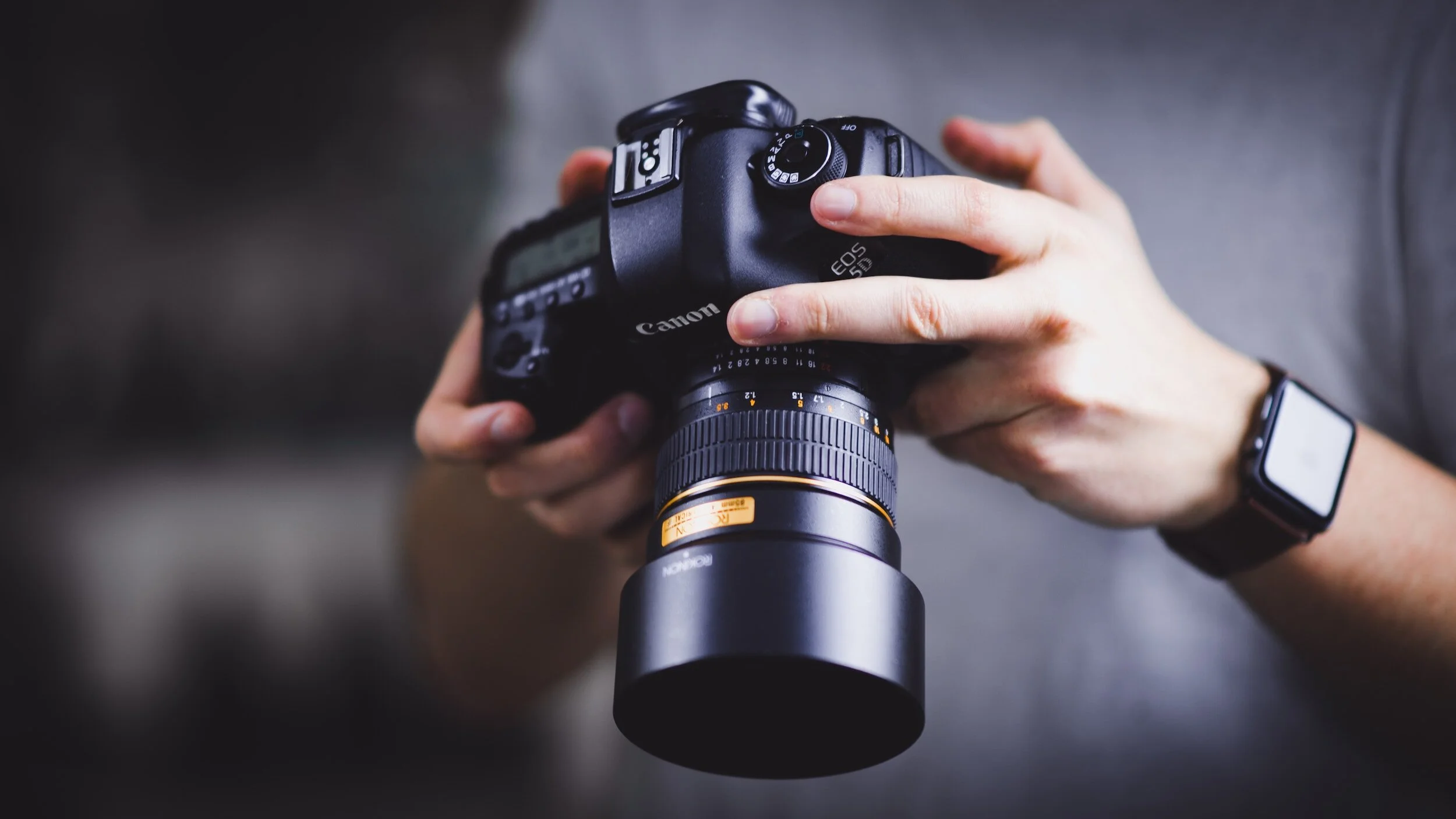
Two people buy the same camera in the same month. Both are keen. Both go out most weekends. A year later, one has several thousand photographs that look much like the first hundred. The other has fewer frames, a clear idea of why some work and most do not, and pictures that are visibly better. The difference was not talent, and it was not money. It was how each of them learned.
Photography is unusually easy to start and unusually easy to plateau in. The camera makes a correct exposure on its own, the screen shows an instant result, and the internet offers an endless supply of free instruction. None of that guarantees progress. Here is what actually moves people forward, and what each way of learning is good and bad at.
Can you teach yourself photography?
Yes. Plenty of fine photographers taught themselves, and every photographer is largely self-taught in the end, because nobody else can stand behind the camera for you. The technical core is learnable from a good book and a manual: how aperture, shutter speed and ISO trade off against each other, what a histogram shows, how focus modes behave. None of it is secret.
The honest problem with self-teaching is not information. It is diagnosis. When a photograph fails, a beginner often cannot tell why. Was the focus on the wrong eye, the shutter speed too slow for the lens, the light flat, the background cluttered, or the idea simply dull? Guess wrong and you practise the wrong fix. It is possible to shoot every weekend for a year and repeat the same four mistakes the whole time.
Self-taught photographers who improve quickly usually build their own feedback loops. They review every outing, not just the keepers. They keep notes on settings that failed. They find a critique group, or one blunt friend. In other words, they stop being entirely self-taught.

Free photography lessons: YouTube, books and forums
Online video is the best free resource photography has ever had. For narrow technical questions, such as how to set back-button focus on a particular camera or where a menu item lives, it is hard to beat. It is also where many people learn to edit, because watching someone move a slider teaches faster than reading about it.
Its weaknesses are structural. Videos are built to be watched, not practised, and it is easy to spend three hours watching and ten minutes shooting. There is no sequence, so beginners jump from long exposure to portrait lighting to astrophotography without the foundations underneath. Quality varies widely, and confident presenters are not always correct. And no video can look at your photograph.
Books are slower and better organised. A good general textbook takes you through exposure, light, lenses and composition in an order that makes sense, and it does not have an algorithm pushing you to the next thing. Photobooks, as distinct from how-to books, are underrated: spending an evening with a strong monograph teaches more about seeing than any tutorial on the rule of thirds.
Forums and online critique groups sit in between. They can give genuine feedback, but it arrives from strangers of unknown experience, often focused on sharpness and noise rather than whether the picture says anything.
What a photography course or workshop gives you
A good class does three things free resources cannot. It puts the ideas in a sensible order. It makes you do the thing, with your own camera, in real light, on the spot. And someone who knows what they are looking at sees your frames while you can still act on it.
That last point matters most. Being told on the steps of State Library Victoria that your shutter speed is too slow for a handheld 200mm lens, and then fixing it on the next frame, embeds the lesson in a way a video never will. Small groups matter for the same reason. With eight people, every participant gets looked at. With thirty, most do not.
The fastest learners are rarely the ones with the most information. They are the ones who find out soonest what they are doing wrong.
Courses have limits too. A three-hour session gives you a push, not a transformation. Much of what you learn will fade unless you use it within a week or two. And a group moves at the pace of the group. Our beginner photography workshop is built around that reality: the aim is to leave with settings you understand and a list of things to go and practise, not a folder of notes.
Mentoring and one-to-one lessons
One-to-one teaching trades breadth for precision. A private lesson starts from your camera, your questions and your photographs. It suits people with a specific problem: a new camera that feels hostile, a style of photography nobody in a group shares, or editing in Lightroom on their own computer.
Mentoring works over months rather than hours. It suits photographers who have the technical basics and have stalled, and who need someone to look at a body of work, name what is and is not happening, set assignments and hold them to them. It is the closest thing photography has to a coach, and like coaching it only works if you do the work between sessions. It is not the right first step for someone still learning what aperture does.
If you are weighing these options, our overview of ways to learn photography in Melbourne sets them side by side.
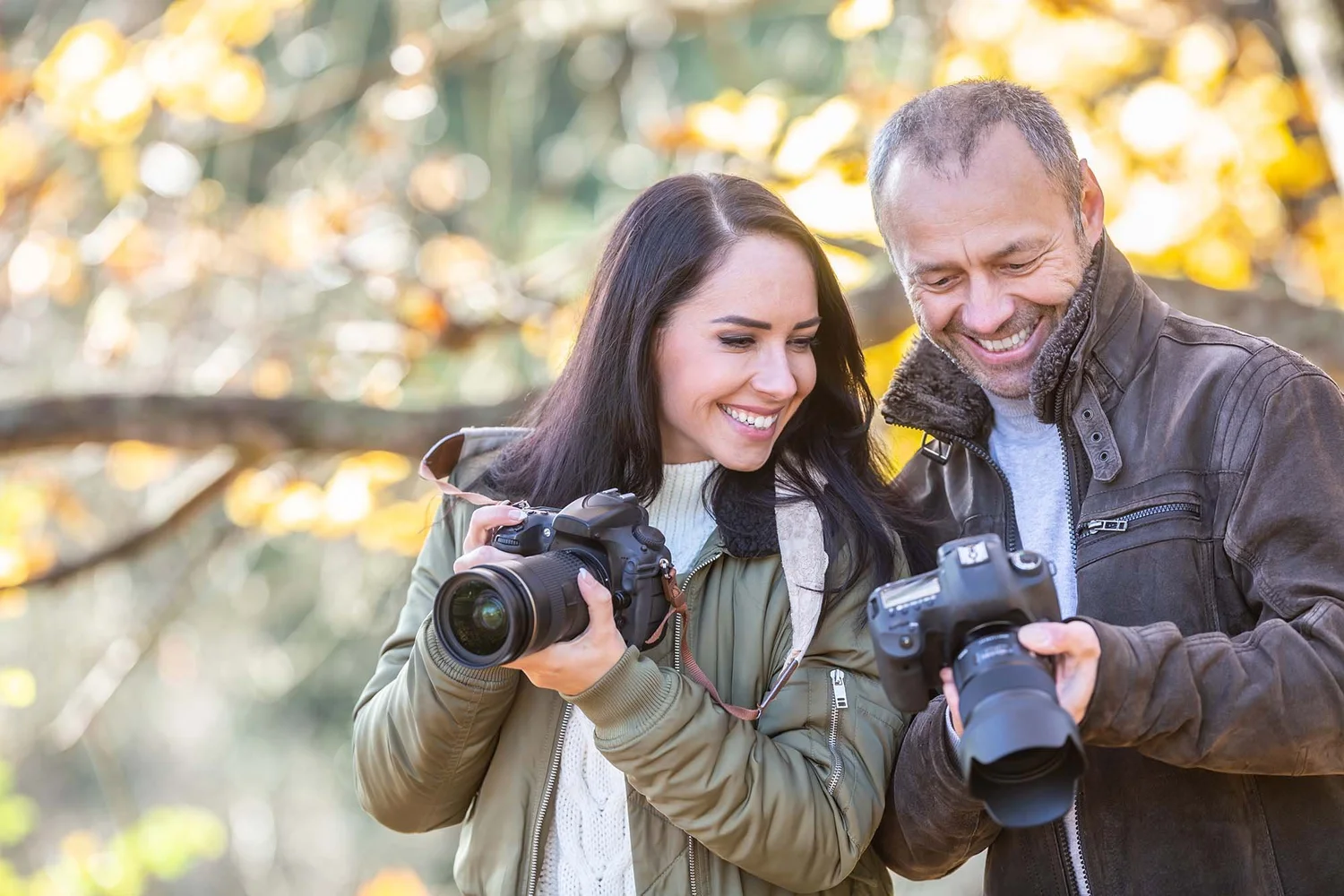
What actually speeds up learning photography
The fastest learners are rarely the ones with the most information. They are the ones who find out soonest what they are doing wrong. Whichever route you take, the same few habits separate steady progress from a long plateau.
- Short gaps between learning and doing. Read or watch one idea, then go out and use it within 48 hours. Knowledge that is not used fades quickly.
- Narrow practice. An outing with one goal, such as only shooting at f/2.8, or only photographing reflections, teaches more than a general wander.
- Honest review. Look at every frame from an outing, not just the best, and write down the three most common problems.
- Outside eyes. Some feedback from someone more experienced than you, on a regular basis, from any source.
- Looking at good work. Exhibitions, photobooks and the permanent collection at the NGV train the eye in ways technical instruction cannot.
The trade-offs are real. Free resources cost time. Courses cost money. Mentoring costs both, plus some exposure to criticism. Most photographers who improve steadily end up mixing all three: free material for information, a class or two for structure and correction, and later, someone to look at the work as a whole.

Practise this
- Take your last 200 photographs and sort them into keep and reject. For every reject, write one word explaining why. Count the words. The top two are your next month's practice.
- Pick one technique you have only watched, not done, and use it on a single outing within two days, shooting at least 50 frames of it.
- Show five of your photographs to someone whose work you respect and ask one question only: which is weakest, and why?
Questions, answered.
Can you learn photography on your own?
Is YouTube enough to learn photography?
Are photography courses worth it?
How long does it take to get good at photography?
Published by CapturEDU, Melbourne photography education. Our educators are award-winning photographers with a Master of Arts in Photography (RMIT), AIPP and RPS membership.

